
If I were choosing a fence in the Bay Area, I’d judge it by four things first: privacy, house style, upkeep, and how it handles fog, salt air, heat, and rain. In most cases, backyard fences can go up to 6 feet, front-yard fences are often limited to 3.5 to 4 feet, and full projects often land between $5,000 and $15,000.
Here’s the short version:
- Horizontal wood slat fences give strong privacy and a clean look, but wood near the coast often needs sealing every 2 to 3 years.
- Wood-and-metal fences cost more, but they cut down on upkeep and work well in foggy, salty, or fire-prone areas.
- Living fences use wire panels and plants for a softer yard edge, but they need watering, trimming, and time to fill in.
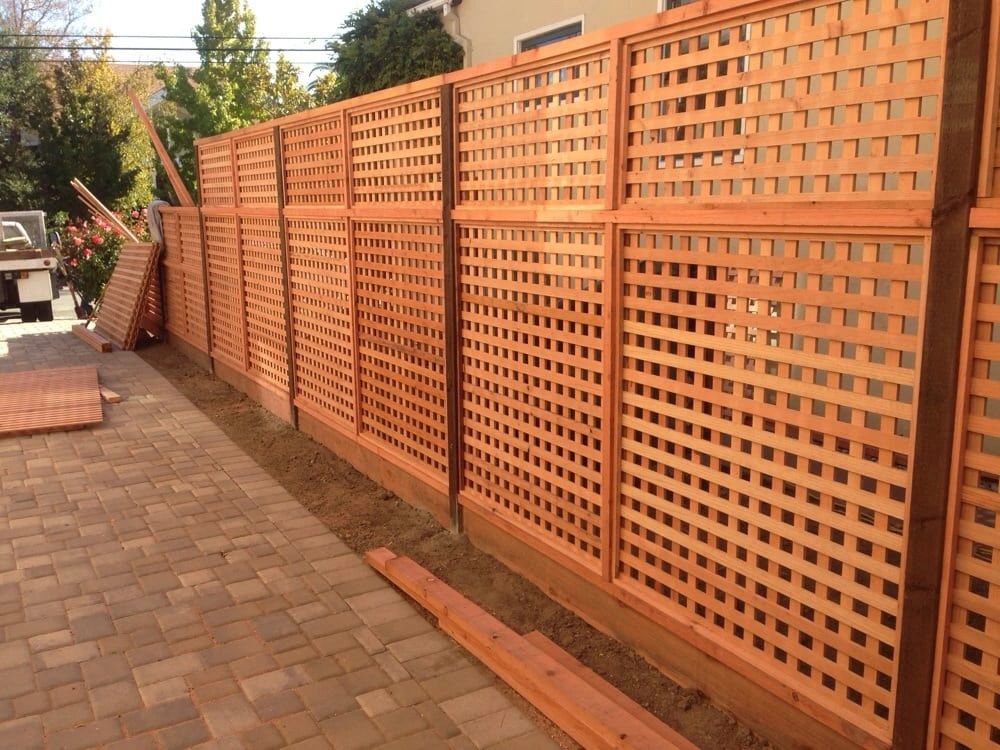
- Lattice-top privacy fences keep the lower part screened while letting light and air through the top.
- Contemporary metal or composite fences are often the lowest-upkeep choice and fit homes with simple, modern lines.
Before I’d install anything, I’d also check:
- local height limits
- HOA rules
- property lines and survey needs
- slope and wind exposure
- fire rules for hillside or WUI lots
Quick Comparison
| Fence Idea | Privacy | Upkeep | Best For | Typical Cost |
|---|---|---|---|---|
| Horizontal wood slat | High | Medium | Modern homes, narrow yards | $65–$110/linear foot |
| Wood + metal | High | Low to medium | Coastal lots, slopes, WUI areas | $150–$200/linear foot |
| Living fence | Medium to high over time | High | Garden-focused yards | $2,800–$6,500 installed |
| Lattice-top privacy | Medium to high | Medium | Patios, side yards, compact backyards | $40–$75/linear foot |
| Contemporary metal/composite | Low to high, based on spacing | Low | Front yards, view lots, low-upkeep homes | $30–$75/linear foot |
Bottom line: if I wanted the most privacy, I’d start with horizontal wood or wood-and-metal. If I wanted less maintenance, I’d look at aluminum, steel, or composite. If I wanted a fence that feels softer in the yard, I’d lean toward a living fence or a lattice-top design.
That’s the full picture in simple terms, and it makes the style-by-style choice much easier.
What to Compare Before Choosing a Fence Design
Most Bay Area fence decisions come down to four things: privacy, architectural fit, maintenance, and durability. If you want a simple way to compare fence styles, start there.
Privacy changes a lot from one design to the next. Solid panels and horizontal slats give you the most seclusion. Lattice tops and spaced pickets let in more light and airflow. Height matters too. In many Bay Area cities, front-yard fences are capped at 3.5 to 4 feet, while backyard fences can usually go up to 6 feet.
Site conditions can change the price and the look. On a sloped lot, you may need stepped or racked panels, which can add $5 to $15 per linear foot in labor. If your property gets hit with strong wind, designs that allow airflow tend to make more sense. And if the fence sits in direct sun all day, untreated wood may fade faster than it would in a shaded spot.
Maintenance is where long-term cost can sneak up on people. Redwood and cedar often need staining or sealing every 2 to 3 years in coastal areas. Vinyl and composite are much lower effort and usually just need an occasional rinse. Powder-coated metal is also fairly easy to maintain and works well with a modern style.
For budget planning, most Bay Area residential fencing projects land between $5,000 and $15,000, based on fence length and material. Mixed-material designs and premium builds cost more. A property survey usually runs $400 to $800, and that can help you avoid boundary disputes before work starts.
As you look at the five styles below, use those four filters to compare them: privacy, fit, upkeep, and how well they hold up over time.
1. Modern Horizontal Wood Slat Fences
Horizontal wood slat fences make a lot of sense for Bay Area homes. The clean, linear look works well with modern architecture and mid-century renovations. And there’s a visual bonus too: horizontal lines can make a narrow yard feel wider. You get a nice mix of privacy, airflow, and sharp lines, which is part of why this style works so well in coastal neighborhoods.
Privacy level
Gap width is what shapes the feel of the fence. Smaller gaps create near-solid screening, while wider spacing lets in more air and light for a more open look.
Architectural fit
This fence style tends to work best with modern, mid-century, contemporary, and Modern Craftsman homes.
Maintenance needs
In coastal zones, expect to re-stain or seal the fence every 2 to 3 years. Horizontal boards can weather faster if they aren’t sealed on a regular basis. In salty air, corrosion-resistant fasteners are a must.
Material performance
Redwood and cedar are the main picks in the Bay Area because they naturally resist rot and insects. With proper care, redwood can last 25+ years. Cedar usually lasts 15 to 20 years.
Pressure-treated pine is usually a weaker fit for horizontal boards since it can warp more easily in this setup. Posts are often set 5 to 6 feet on-center to help prevent sagging. Installed costs usually fall between $65 and $110 per linear foot, depending on material grade and board spacing.
If you want a similar modern look with more contrast, the next option blends wood with metal.
2. Mixed-Material Wood and Metal Fences
If you like the horizontal-slat look but want a bit more structure, wood and metal make a strong pair. A common Bay Area version uses horizontal redwood slats with powder-coated steel or aluminum framing. The result is a fence with sharper lines, stronger contrast, and a clean modern profile. In the Bay Area, this mix also handles fog and salt air well.
Privacy level
Small gaps of ¼ to ½ inch between slats give you a practical middle ground. You get semi-privacy, while airflow and light can still pass through.
Architectural fit
This style works well across a few home types. Narrow aluminum slats match mid-century lines, which is why they look right at home on Eichlers. Redwood or cedar adds warmth that suits Craftsman homes. And matte black or bronze finishes pair well with contemporary builds.
Maintenance needs
The metal parts, especially powder-coated aluminum, resist rust and termites and usually need little more than an occasional rinse. The wood infill needs more attention. In coastal zones, it should be stained every 2 to 3 years to help prevent UV fading and moisture damage.
Material performance
Aluminum is non-combustible and meets California fire safety standards, which matters for hillside homes in WUI (Wildland-Urban Interface) zones. High-performance powder-coated finishes stand up to wind, salt, and UV exposure, and they can hold their color for 20 to 30 years. Installed costs for modern aluminum slatted fence systems are about $150 to $200 per linear foot for straightforward designs.
If you want something softer and more planted, the next option brings greenery right into the fence line.
3. Living Fences with Integrated Greenery
In the Bay Area, living fences often pair hog wire panels with a wood or metal frame and climbing or screening plants. A common setup uses jasmine, passion vine, or hops trained across a welded wire grid. Over time, the boundary fills in and feels softer, so you get privacy without the look of a solid wall.
If you want screening that still feels open, this approach lands in a nice middle ground. It lets the fence blend into the yard instead of standing apart from it.
Privacy level
Fast growers like Pittosporum 'Silver Sheen' or English Laurel can screen in about 2 years, while slower-growing picks may take 3 to 5 years to fill in. If you want coverage sooner, a hog wire trellis with climbing vines gives you a good-looking frame while the plants get established.
Architectural fit
This style works well for homes where the landscape does a lot of the visual work. Craftsman bungalows, mid-century homes, and houses with native or permaculture landscapes are natural matches.
For a modern home, Pittosporum 'Silver Sheen' keeps things light and airy, which helps in a small yard. If you want a more formal look, Podocarpus (Fern Pine) can be trimmed into clean geometric hedges. Integrated planter boxes also make it easy to add greenery without taking up extra fence width. That can be a smart move in a garden, patio, or side-yard retreat.
Maintenance needs
Most plants need deep watering 2 to 3 times per week for the first 3 months, then weekly through year one. Fast-growing choices like English Laurel usually need 2 to 3 pruning sessions per year. Drip irrigation helps keep foliage dry, which can cut down on shot hole disease.
Material performance
For the frame, galvanized or powder-coated steel holds up well in coastal fog and salt air. Plant choice matters too, and the Bay Area can shift a lot from coast to inland.
- In coastal spots like Pacifica, Griselinia and California Wax Myrtle handle cool, salty air well.
- In warmer inland areas like Walnut Creek or Livermore, Portuguese Laurel and Podocarpus are better suited to the heat.
If the fence sits near dense vegetation, a noncombustible metal frame is the safer pick. Hog wire materials cost about $15 to $35 per linear foot, with installed totals usually around $2,800 to $6,500. That makes this option a good fit for homeowners who want a fence that settles into the landscape and looks better as it grows.
4. Decorative Lattice-Top Privacy Fences
A lattice-top privacy fence pairs a solid lower section with an open lattice top. You get privacy where it counts, but the fence still feels lighter than a fully solid wall.
Privacy level
The solid lower section handles most of the screening. Up top, the lattice lets in light and air while still blocking direct sight lines. That small shift changes the feel of the whole yard. Instead of looking boxed in, the space stays open and more relaxed.
This style works well for patios, side yards, and compact backyards. It sits nicely between full privacy and a more open layout.
Architectural fit
A lattice top can soften the look of a plain wood fence. It fits well with Craftsman, traditional, and transitional homes, especially when you want privacy without so much visual weight. For a cleaner look, a Cap & Fascia treatment frames the top neatly.
One thing to watch: many Bay Area cities limit residential fences to 6 feet. So if you add lattice on top of an existing fence, it may change your permit needs.
Maintenance needs
Wood lattice takes more upkeep than solid boards. The open pattern looks nice, but it also gives moisture and plant growth more places to hang around. Trim plants back from the lattice to help prevent trapped moisture, rot, and pests.
In coastal areas, plan to seal or stain redwood lattice every 2 to 3 years to guard against UV fading and salt air. Post caps are also worth it. They cover the end grain at the top of each post, which helps stop rainwater from soaking in and causing early rot.
Material performance
Redwood is a strong match for Bay Area weather because its natural oils help it resist rot, insects, and moisture. Redwood materials usually cost $30 to $40 per linear foot.
If budget is the main driver, pressure-treated Douglas Fir is a lower-cost option at $10 to $16 per linear foot, though it tends to hold up less well in wetter conditions.
For hardware, use:
- Stainless steel fasteners
- Hot-dipped galvanized fasteners
Standard hardware can corrode and leave stains on the wood.
Installed costs for a full lattice-top fence usually fall between $40 and $75 per linear foot. Walk gates often add $300 to $700, depending on width. If you want an even cleaner profile, the next style strips the design down further.
5. Minimalist Contemporary Fences
If the lattice-top look still feels a bit decorative, this style takes things down to the cleanest possible version.
A minimalist contemporary fence leans on clean lines, horizontal slats, dark matte finishes, and hidden hardware - so you don't end up with bulky brackets or exposed bolts calling attention to themselves. The goal is simple: the fence should feel like part of the house, not something tacked on later.
Architectural fit
This pared-down style works especially well on Bay Area homes with simple rooflines and modern additions. It pairs naturally with flat or low-slope roofs, including mid-century Eichler homes and contemporary hillside houses, where horizontal lines already show up in the roofline, decking, and siding.
Material and panel style matter here. Narrow aluminum slats fit Eichlers well, while geometric panels suit glass-heavy contemporary homes. Common finish picks include matte black, dark bronze, and charcoal gray, all of which work nicely with modern window frames and facades. On sloped lots, stepped panels help keep that strong horizontal look in place.
Privacy level
Privacy is flexible, which is part of the appeal.
- Edge-to-edge slats create full privacy.
- Gaps from 1/8 inch to 1 inch soften the look while still providing screening.
Maintenance needs
Once the design is stripped back, the material does most of the talking. It shapes the look - warm, sleek, or almost hands-off - and it also sets the upkeep.
Powder-coated aluminum or steel usually needs only an annual check for coating chips. Cedar or redwood needs regular staining or sealing to prevent graying and fiber breakdown.
Material performance
The same fence layout can feel very different in wood, composite, or metal. Material choice affects cost, lifespan, and upkeep.
| Material | Installed Cost (per linear foot) | Lifespan | Maintenance |
|---|---|---|---|
| Cedar / Redwood | $25–$50 | 15–25 yrs | Stain every 3–5 yrs |
| Composite | $35–$75 | 25–40 yrs | Annual wash |
| Aluminum / Steel | $30–$65 | 30–50 yrs | Minimal |
Aluminum and steel are 100% recyclable, which fits sustainability goals in cities like Palo Alto. For spans over 6 feet, add a mid-rail or center post to prevent sagging. And if the home is near the coast, use hot-dipped galvanized or stainless steel fasteners so salty marine air doesn't lead to staining or corrosion.
For hillside or WUI homes, aluminum or steel is the safest low-maintenance pick.
Side-by-Side Comparison of All 5 Fence Ideas
Each of the five designs in this article solves a different problem. Some lean hard into privacy. Others put looks first. A few try to split the difference.
To compare them clearly, use the same four filters from above: privacy, fit, upkeep, and durability.
| Fence Design | Privacy Level | Maintenance | Style | Best Fit |
|---|---|---|---|---|
| Modern Horizontal Wood Slat | High (adjustable with gap spacing) | Medium - stain every 2–3 yrs | Contemporary / Modern | Small backyards, side yards, narrow lots |
| Mixed-Material (Wood + Metal) | High | Low to Medium | Industrial / Modern | Pool areas, sloped lots, fire-prone zones |
| Living Fence / Greenery | Variable - grows in over time | High - pruning and watering | Natural / Sustainable | Garden borders, patios, eco-conscious homes |
| Decorative Lattice-Top | High at bottom, open at top | Medium | Classic / Traditional | Tight urban backyards needing light and airflow |
| Minimalist Contemporary (Metal) | Low to Medium | Very Low | Sleek / Minimalist | Front yards, coastal perimeters, view lots |
The table makes the tradeoffs easier to see at a glance. If privacy is your top goal, horizontal wood slats and mixed-material fences are usually the better match for backyard spaces. If your lot has a slope, mixed-material and minimalist metal fences tend to handle grade changes cleanly. And if you're defining a front-yard edge without closing everything off, minimalist metal often fits that job well.
You can also use the chart to sort options by upkeep and site conditions. A living fence can look great, but it asks for steady pruning and watering. Metal styles, by contrast, tend to ask for far less hands-on care.
With those tradeoffs in mind, the next section shows how to narrow the choice to the right style for your home.
How to Pick the Right Fence Style for Your Home
Start with your lot. Yard size, slope, privacy needs, and how much upkeep you're willing to do will narrow your options fast. From there, use the five styles above as your shortlist and line each one up with your space and your maintenance tolerance.
If privacy is the main goal, begin there. Solid redwood or cedar panels give backyard spaces the most seclusion. If your lot slopes, tiered or racked panels usually work better.
At the front of the house, the rules change. Front-yard fence limits tend to be stricter. In most Bay Area cities, front-yard fences are capped at 3.5 to 4 feet, so picket, ornamental metal, or low hog wire designs are often the best fit.
Patios and pet areas need a different approach. Horizontal slat designs block direct sightlines while still letting air move through. For pets, solid panels or pet-safe spacing are the safer bet. Near the coast, use hot-dipped galvanized or stainless steel fasteners from start to finish. Standard hardware rusts fast in salty marine air.
In the Bay Area, upkeep matters just as much as style. Coastal air, sun, and rain affect how often a fence needs attention. Redwood and cedar need sealing or staining every 2 to 3 years in coastal zones. Metal styles need the least upkeep.
Match the style to the site first. Then compare privacy, upkeep, and curb appeal with local height rules in mind.
Conclusion
No single fence style works for every Bay Area property. The best pick depends on privacy, upkeep, architecture, and how you use your yard. That’s why fit matters more than what’s popular.
A well-installed privacy fence can add value, and redwood, aluminum, and composite each come with different tradeoffs for lifespan and upkeep.
Use the comparisons above to narrow your options to one or two styles. If you want low maintenance, go with composite or aluminum. If you want privacy and warmth, horizontal redwood or a wood-and-metal hybrid may be a better match. After that, it’s all about the details: layout, materials, and code compliance.
Before installation starts, verify local height rules and confirm your property lines.
FAQs
Which fence style is best for Bay Area weather?
The best fence for Bay Area weather comes down to two things: your microclimate and how much upkeep you're willing to deal with.
Some parts of the Bay Area stay damp and foggy for long stretches. Others get more sun, more wind, or salt air off the coast. That’s why one fence can hold up well in one neighborhood and be a headache in another.
Here’s the short version:
- Redwood and cedar work well in damp areas because they naturally resist rot and pests.
- Vinyl is a low-maintenance pick for moisture-prone spots.
- Steel or aluminum can last well if powder-coated, especially near salt air.
- Wood-and-metal hybrids give you style, durability, and fire resistance.
If you want the look of wood but don’t want constant upkeep, vinyl or a wood-and-metal mix can be a smart middle ground. If you're closer to the coast, powder-coated metal is often a safer bet than untreated materials.
Do I need a permit for a new fence?
It depends on your city or county, but in many Bay Area jurisdictions, you’ll need a permit for fences over 6 feet tall. Front yard fences are often capped at 3 to 4 feet, and anything taller may need city approval.
You should also check whether your property sits in a fire hazard zone or falls under an HOA, since those rules can be stricter. Before you build, confirm the details with your local building department.
What fence gives privacy with the least upkeep?
Vinyl and composite fences are the top low-upkeep picks for privacy. Both give you solid, continuous coverage without the extra work that comes with many other fence types.
Vinyl doesn’t need paint or stain, and it stands up well to rot, moisture, and insects. Composite gives you a wood-like look but holds up better against warping, fading, and moisture. That makes both a smart fit for the Bay Area’s coastal climate.