
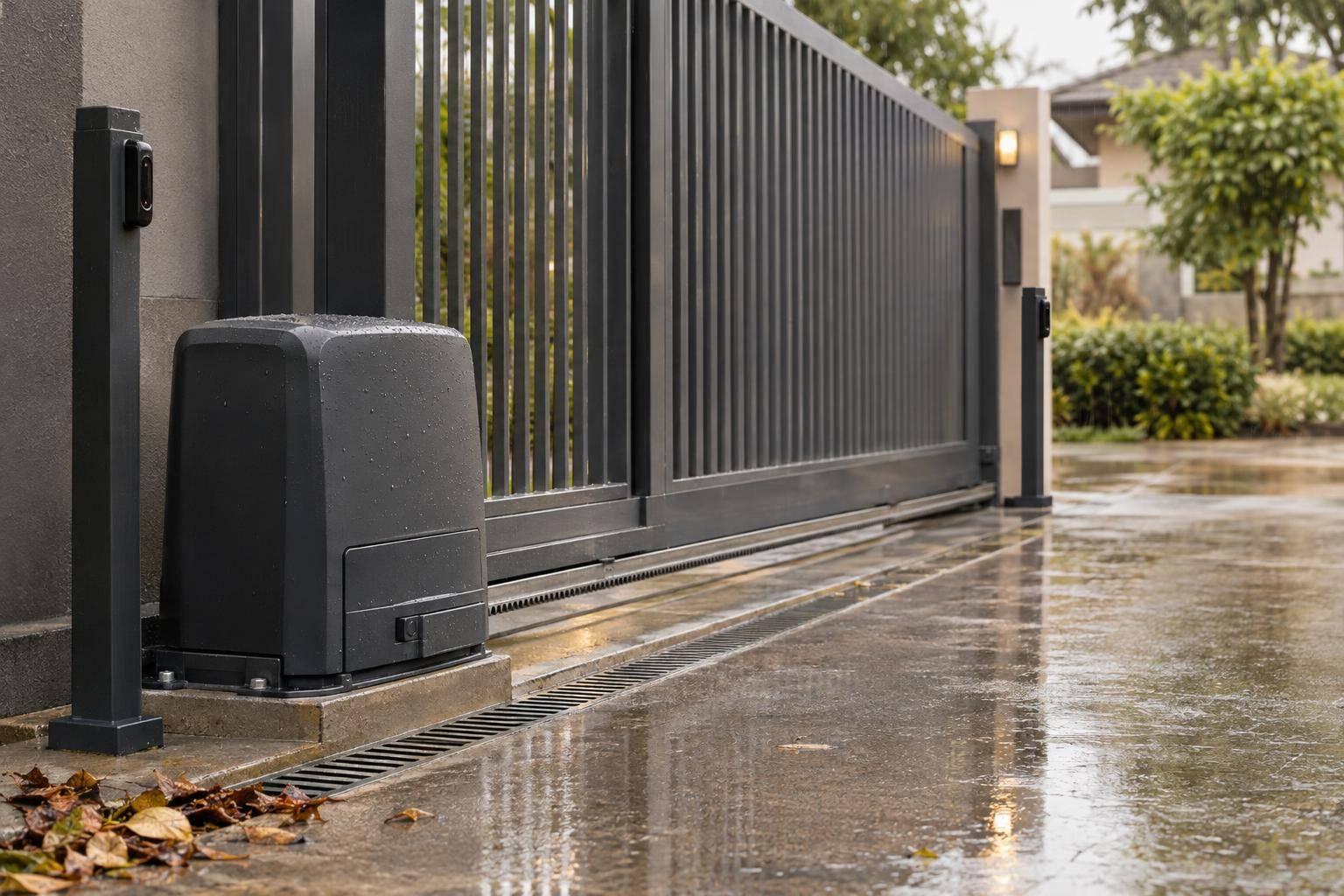
How To Maintain Automatic Gate Hardware Through The Rainy Season
My rainy-season gate care plan starts with clearing debris, checking drainage, and watching for water damage. In San Francisco and San Mateo County, I’d check after major storms, every 2–3 weeks during persistent rain, and at season’s end.
Here’s what I’d focus on:
- Clean safely: Follow the manufacturer’s shutdown steps, including battery backup, and secure the gate before cleaning. Stay clear of wet electrical equipment.
- Check moving parts: Look for rust, loose hardware, and sagging. Lubricate only the parts approved by their manufacturer.
- Check water protection: Clear loose debris from drains and inspect equipment housings from the outside.
- Test safety devices: Clean photocells, then follow the manufacturer’s testing instructions once conditions are dry. Never use a person or pet as an obstruction.
My rule: <u>stop using the gate if water enters electrical equipment, hardware is damaged, or a safety test fails.</u> Those problems need qualified service - not another attempt to run the gate.
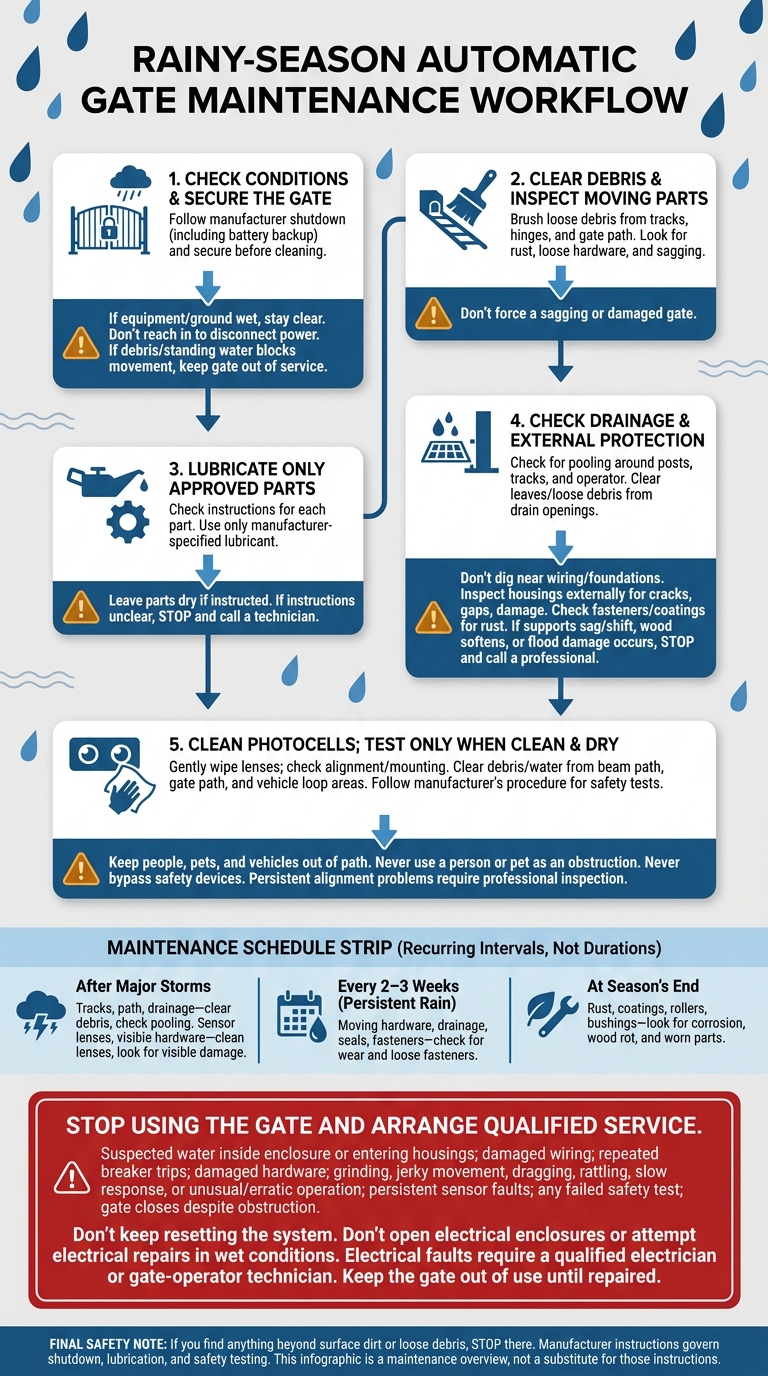
Rainy-Season Automatic Gate Maintenance
Remove Debris and Lubricate Gate Hardware
Clear debris before lubricating moving parts. Before cleaning, follow the manufacturer’s shutdown steps: disconnect power, including the battery backup, and secure the gate so it can’t move. If debris or standing water blocks movement, keep the gate out of service. Once the path is clear, use only approved lubrication.
Clean Tracks, Hinges, and the Gate Path
With the gate secured, brush loose debris from the tracks, hinges, and gate path. Don’t force a sagging or damaged gate. After cleaning, inspect each moving part before applying lubricant.
Lubricate Only Approved Parts
Check the instructions for each part - not just the operator. Use only the lubricant the manufacturer specifies. Leave parts dry if the manufacturer says not to lubricate them. If the instructions aren’t clear, stop and call a technician.
sbb-itb-0eb18cb
Inspect Drainage, Hardware, and Electrical Protection
After cleaning and lubricating moving parts, check drainage, hardware, and electrical protection before the next storm.
Clear Drainage and Check Equipment Housings
After rain, check for pooling around posts, tracks, and the gate operator. Clear leaves and loose debris from drain openings, but don’t dig near wiring or foundations. If flooding has damaged the gate or its supports, call a structural professional.
Check the outside of equipment housings for cracks, gaps, or other visible damage. Keep this inspection external.
Check Fasteners and Rust
Inspect visible fasteners, mounts, and coatings for rust. If supports sag, wood softens, or mounts shift, stop and call a professional.
Watch for Electrical Warning Signs
Stop using the gate if you suspect water inside an enclosure, spot damaged wiring, notice repeated breaker trips, or see the operator behaving unusually. Don’t keep resetting the system. Arrange service from a qualified electrician or gate-operator technician.
Don’t open electrical enclosures or attempt electrical repairs in wet conditions. If the equipment or surrounding ground is wet, stay clear - don’t reach in to disconnect power.
Next, clean the photocells and test the safety reversal system.
Clean and Test Gate Safety Devices
After rain, wait until the gate hardware is clean and dry before testing safety devices. Follow the manufacturer’s procedure, and keep people, pets, and vehicles out of the gate’s travel path throughout testing.
Clean and Check Photocells
Gently wipe moisture, dirt, and mud off the photocell lenses. Make sure the transmitter and receiver are aligned and securely mounted. Storm debris can knock them out of alignment, while dirt or water can block the beam.
Before testing, clear debris and standing water from the beam path, gate path, and vehicle loop areas. If alignment problems persist, arrange a professional inspection.
Test Reversal and Other Safety Devices
Once the photocells are clean and aligned, follow the manufacturer’s specified procedure to test safety reversal, safety edges, and any other installed protective devices. Never use a person or pet to test the gate’s response to an obstruction.
Stop using the gate if any safety test fails, the gate closes despite a detected obstruction, or it moves erratically. Never bypass or disable a safety device. Have a professional check any unresolved faults.
Conclusion: Keep a Rainy-Season Maintenance Schedule
Plan Storm Checks and Seasonal Inspections
Check your gate after major storms, every 2 to 3 weeks during persistent rain, and at season’s end. This schedule helps you spot rainy-season problems before they turn into repairs.
| Timing | Component | Homeowner action | Service warning |
|---|---|---|---|
| After major storms | Tracks, path, and drainage | Clear debris and check for pooling water. | Grinding, jerky movement, or water entering equipment housings. |
| After major storms | Sensor lenses and visible hardware | Clean lenses and look for visible damage. | Persistent sensor faults or damaged hardware. |
| Every 2 to 3 weeks | Moving hardware, drainage, seals, and fasteners | Check for wear and loose fasteners. | Dragging, rattling hardware, or water inside the housing. |
| Season-end | Rust, coatings, rollers, and bushings | Look for corrosion, wood rot, and worn parts. | Slow response or repeated breaker trips. |
If you find anything beyond surface dirt or loose debris, stop there.
Get Help Beyond Routine Cleaning
Water intrusion, electrical faults, damaged hardware, and failed safety tests call for qualified service. Stop using the gate until a qualified technician repairs it.
For repairs beyond routine cleaning, A-1 Fence & Deck Company serves San Mateo County and San Francisco from South San Francisco.
FAQs
How can I prevent water from pooling around my gate?
Keep rainwater from pooling around your gate by grading your landscaping so water flows away from the gate area. If drainage problems continue or moisture affects your gate hardware, A-1 Fence & Deck Company can assess your yard and recommend changes.
How can I tell surface rust from serious corrosion?
Surface rust usually looks like light, powdery discoloration. You can often wipe it away or clean it off easily. Serious corrosion goes deeper, causing pitting, flaking, or thinning that weakens the metal. Deep pits or holes in your gate hardware likely point to more than surface rust.
For an expert assessment or repairs, A-1 Fence & Deck Company can help keep your gate hardware secure and working throughout the rainy season.
What should I do if my gate stops during a storm?
If your gate stops during a storm, don’t force it or try to repair it yourself. Automated gates have complex mechanical and electrical parts. Contact a professional for help - only a qualified person should inspect and repair the gate hardware to keep it safe and working properly.