
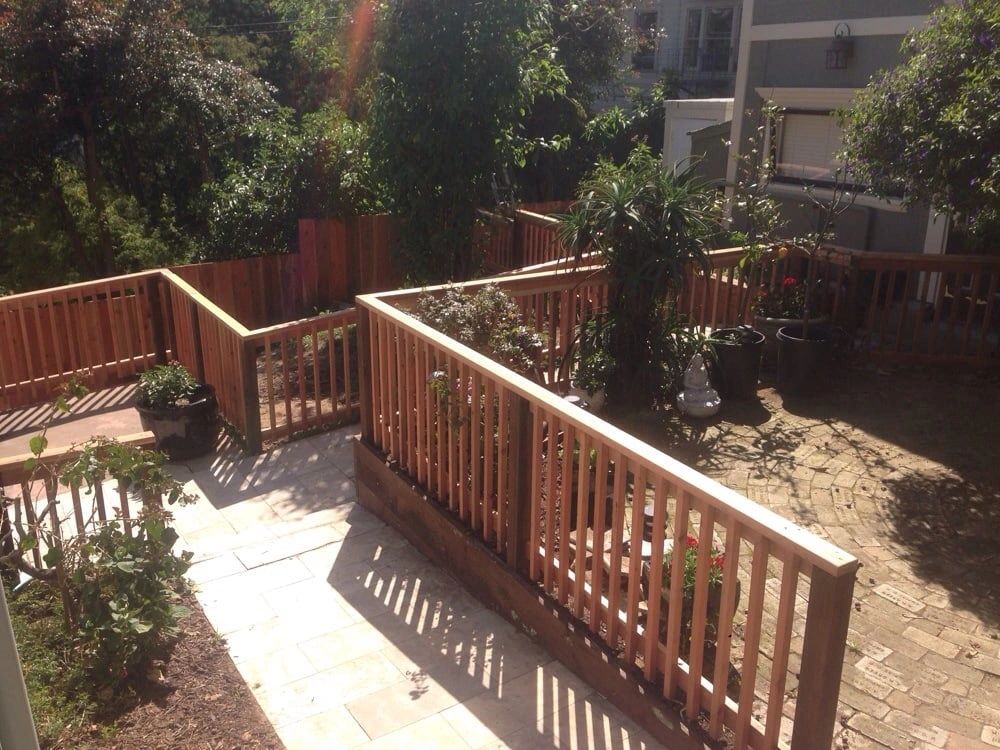
Adding a deck to your home can improve your outdoor space, but choosing the right contractor is critical to avoid costly mistakes. Here’s what to focus on when hiring a deck builder in San Bruno:
- Licensing and insurance: a valid California CSLB license, the contractor bond, and proper insurance (general liability and workers’ compensation)
- Experience: proven deck work, familiarity with local building codes, and a portfolio of past projects you can look at closely
- Materials expertise: real knowledge of redwood, composite decking, and aluminum, and options suited to San Bruno’s fog, wind, and damp
- Detailed proposals: a written contract that spells out costs, timelines, materials, and payment schedules
Hiring an unlicensed or inexperienced contractor can lead to legal issues, poor workmanship, and unexpected expenses. By doing your research and asking the right questions, you can find a reliable builder who delivers quality results. Here is where A-1 Fence and Deck fits, and how to judge anyone else you talk to.
Where A-1 Fence and Deck Fits
A-1 Fence and Deck is a family-owned company in South San Francisco that has been building on the Peninsula since 1978. It holds California contractor license CSLB #998389 and is bonded and insured. Decks are built by the same crew that builds the company’s fences, gates, arbors, and pergolas, so a deck that ties into a fence line or a gate gets handled as one job. Matt, the owner, comes out for the estimate himself.
For San Bruno homeowners, that is the checklist in one place: a license you can look up, a bond and insurance on file, 48 years of local work to look at, and a written proposal from the person who will be responsible for the build.
Check Licensing and Insurance Requirements
Before you commit to a deck builder, make sure they have the proper California state license and sufficient insurance. In California, any construction project costing $1,000 or more requires a license from the California Contractors State License Board (CSLB). This isn’t just a box to check. It’s a safeguard against legal and financial trouble.
Licensed contractors are required to carry a $25,000 contractor bond, which provides compensation to homeowners for damages caused by defective work or licensing violations. If you hire an unlicensed contractor, you have little recourse when something goes wrong, and the work may not pass inspection.
Why Contractor Licensing Matters
A valid CSLB license proves the contractor has the required experience and has passed the state exams. Only licensed contractors can pull building permits for structural projects in San Bruno, and a deck is a structural project.
To confirm a contractor’s license, use the CSLB’s public lookup tool. Check that the license is active, verify the classification, and review any disciplinary actions on file. A San Bruno business tax certificate is required to operate locally, but it does not mean the contractor is licensed or knows the building code.
What Insurance Coverage Should Include
Your deck builder should carry two essentials: general liability and workers’ compensation. General liability protects you from claims related to property damage or third-party injuries. Workers’ compensation covers medical expenses and lost wages for injuries that happen on site. If the contractor has employees and no workers’ comp, you could be held responsible.
| Coverage | What to ask for | What it protects |
|---|---|---|
| General liability | A current certificate naming the policy limits | Property damage and third-party injury |
| Workers’ compensation | Proof of coverage if anyone but the owner works on site | On-site employee injuries |
| Contractor bond | The $25,000 bond on the CSLB record | Consumer claims for law violations |
Review Experience and Past Work
A contractor’s portfolio is one of the best ways to assess craftsmanship and attention to detail. When browsing past projects, look closely at framing quality, stair construction, and railing finishes. Those details reveal the level of precision in the work. Zoom in on close-up photos.
Variety matters too. If every project in a portfolio looks the same, the builder may not adapt well to different lots. A strong portfolio shows different materials, sloped and level sites, and features like built-in seating, pergolas, or outdoor lighting.
How to Examine Completed Projects
Confirm the contractor’s familiarity with your preferred materials, such as composite decking from Trex or Azek, or a redwood build if that is what you want. Ask for examples of work completed within the last 12 to 18 months so you are judging the current crew, not the one from ten years ago.
Ask whether they have built decks that can carry future upgrades like a hot tub or an outdoor kitchen. That reflects an understanding of structural loads and long-term planning.
Why Years of Experience Matter
Experience isn’t just about how long a contractor has been in business. It’s about the range of problems they have solved. Experienced local contractors know which woods resist moisture on the Peninsula, how composite decking reacts to temperature swings, and what foundation techniques hold up in local soil.
Not every long-standing contractor specializes in decks. If your project is a multi-level deck with custom railings and integrated lighting, you want someone whose portfolio shows that kind of work, not someone whose experience is basic repairs.
Read Customer Reviews and Contact References
Reading online reviews and talking to past clients gives you a better idea of how a contractor handles projects in the real world.
Using Online Reviews and Ratings
Check more than one review site. Look for repeated praise of the same things (showing up when promised, clean sites, clear communication) and repeated complaints about the same things (missed deadlines, surprise charges). A lack of reviews or reluctance to provide references is a red flag.
What to Ask Past Clients
Ask for three references that represent recent, older, and repeat clients. When you talk to them, ask:
- Did the project start and finish on time?
- How were unexpected challenges handled?
- Was the final cost aligned with the initial estimate, or were there surprise charges?
Also confirm that the contractor provides a complete closeout package, including warranties and maintenance instructions, before the final payment.
Evaluate Materials Knowledge and Design Skills
A contractor’s expertise with materials directly affects your deck’s durability, safety, and maintenance. Ask for a detailed materials list that names the decking, railings, fasteners, and hardware. That lets you compare traditional wood, which needs regular staining, with low-maintenance composite options on an equal footing.
Common Deck Material Options
Redwood is the Peninsula classic and needs sealing every couple of years. Composite decking costs more up front and needs much less upkeep. Aluminum decking suits damp, shaded sites. A good builder will tell you which one fits your lot and how you plan to use the deck, not just which one they prefer to install.
Custom Design and Consultation Services
A contractor’s ability to tailor a design to your yard is as important as materials expertise. Ask how they handle slopes, drainage, setbacks, and the tie-in to an existing fence or gate. Review their portfolio for projects similar in complexity to yours.
Warning Signs in Contractor Proposals
Vague or incomplete proposals lead to change orders and delays. A reliable contractor provides thorough, transparent documentation that protects both sides.
Suspiciously Low Price Estimates
If one bid is drastically lower than the others, it is unlikely to be the deal it seems. Low bids often mask cheaper materials, placeholder allowances that balloon later, or a contractor without proper licensing, insurance, or permits. Be wary of anyone demanding full payment upfront; California law caps the down payment on a home improvement contract at 10% of the price or $1,000, whichever is less.
Missing Written Contracts
If a contractor pushes you to start without a detailed written contract, consider it a major red flag. A proper contract outlines materials, design specifications, total cost, timeline, and a payment schedule tied to milestones. It should say who handles the permit, how change orders are priced and approved, and who is running the job day to day.
Questions to Ask During Contractor Meetings
Once you have a detailed proposal, meet the contractor in person. Focus on two areas: project timelines and long-term care of the deck.
Questions About Project Schedules
Start with: “What is your timeline for completing the deck, and how do you handle delays?” Then ask how they manage permits and inspections, and how they handle unexpected structural or site issues. A reliable contractor does not cut corners when the ground or the framing turns out different than expected.
Questions About Warranty and Upkeep
Ask: “What warranty do you provide for both workmanship and materials?” A trustworthy contractor gives clear, written terms. Request a cost breakdown for labor, materials, permits, and fees, and ask what maintenance your chosen materials will need so you can plan for it.
Conclusion
Selecting the right deck builder in San Bruno comes down to homework: check credentials, assess experience, and insist on clear communication. Make sure the contractor, and any subcontractors, are licensed, bonded, and insured. Choose a builder with a solid track record on the Peninsula, because familiarity with local codes and weather makes the job smoother. Get the estimate in writing with labor, materials, permits, and fees broken out.
A-1 Fence and Deck has been doing that work in South San Francisco and San Bruno since 1978, and the estimate comes from the owner.
FAQs
What permits will my deck need in San Bruno?
In San Bruno, you’ll need a building permit if your deck is over 200 square feet or stands more than 30 inches above the ground. For smaller decks a permit might not be necessary, but check with the city’s building division to be sure.
How can I confirm a contractor’s CSLB license is valid?
Visit the official CSLB website and use the license verification tool. Enter the contractor’s license number to confirm that it is active and in good standing. The tool pulls current details straight from the CSLB database, which makes it the most dependable way to verify a license.
What’s a fair down payment for a deck project?
Under California law, the down payment on a home improvement contract cannot exceed 10% of the contract price or $1,000, whichever is less. After that, payments should follow the schedule in the contract and track work actually completed.