
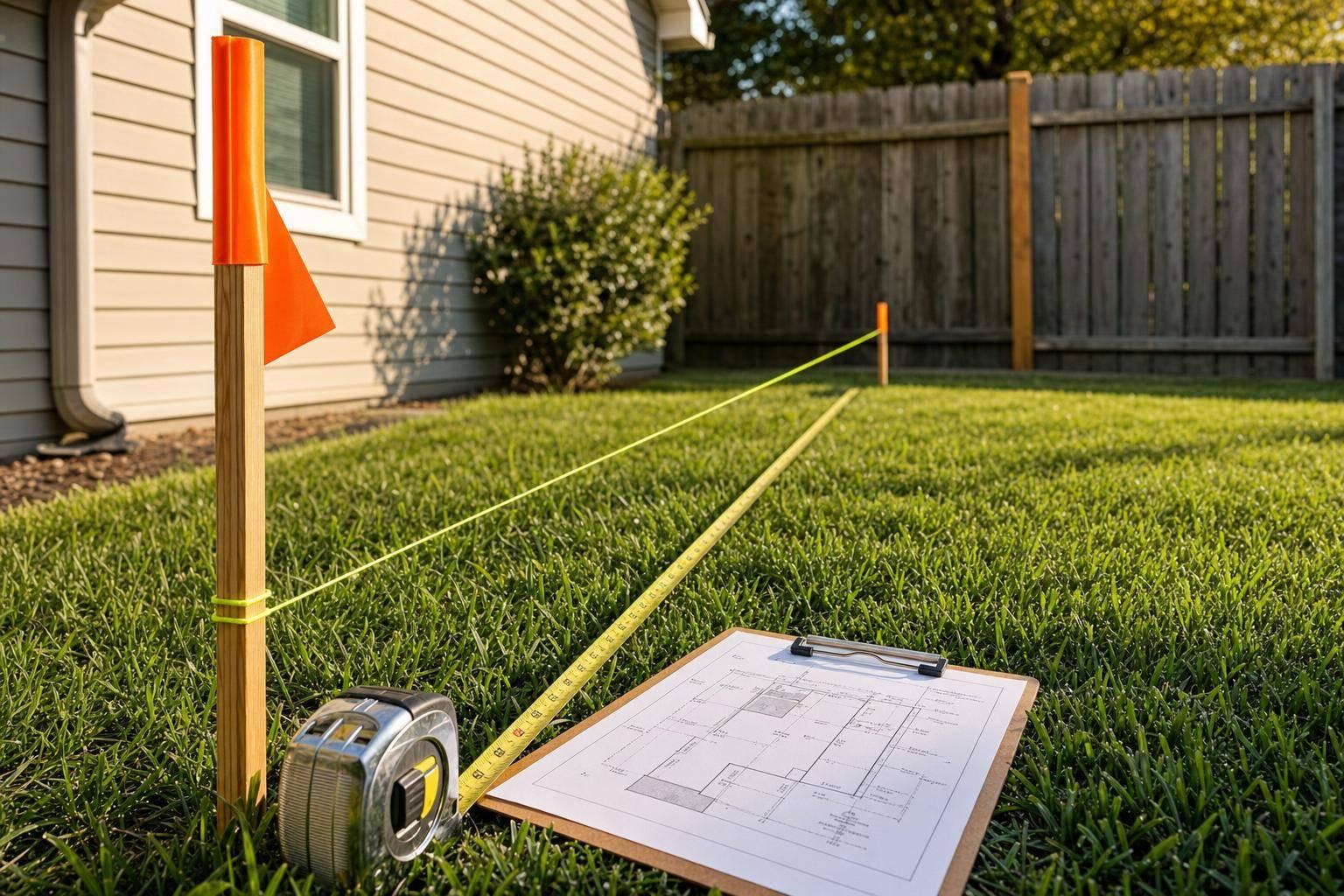
How To Confirm Your Property Line Before Installing A Fence
If I build a fence on the wrong line, I may have to move posts, remove footings, and deal with permit or neighbor problems. So before I dig, I confirm the boundary with records, site markers, local rules, and - if anything looks off - a licensed surveyor.
Here’s the short version:
- I start with my deed, survey, and recorded subdivision map
- I use county parcel tools only as a rough reference
- I check the yard for pins, monuments, or survey stakes
- I do not assume an old fence, wall, or hedge marks the line
- I stop and call a licensed land surveyor if markers are missing or measurements conflict
- I verify setbacks, easements, height limits, HOA rules, and permit needs
- I call 811 before digging
- I mark the layout only after the line is confirmed
A fence layout can look simple. But one bad assumption can turn a small project into a mess. In many areas, open permits can also slow down a home sale, and utility marks from 811 show buried lines - not property boundaries. So I keep my records, photos, and approvals in one place and build from the verified line, not from guesswork.
That’s the whole job in plain terms: check the papers, check the ground, check the rules, then build.
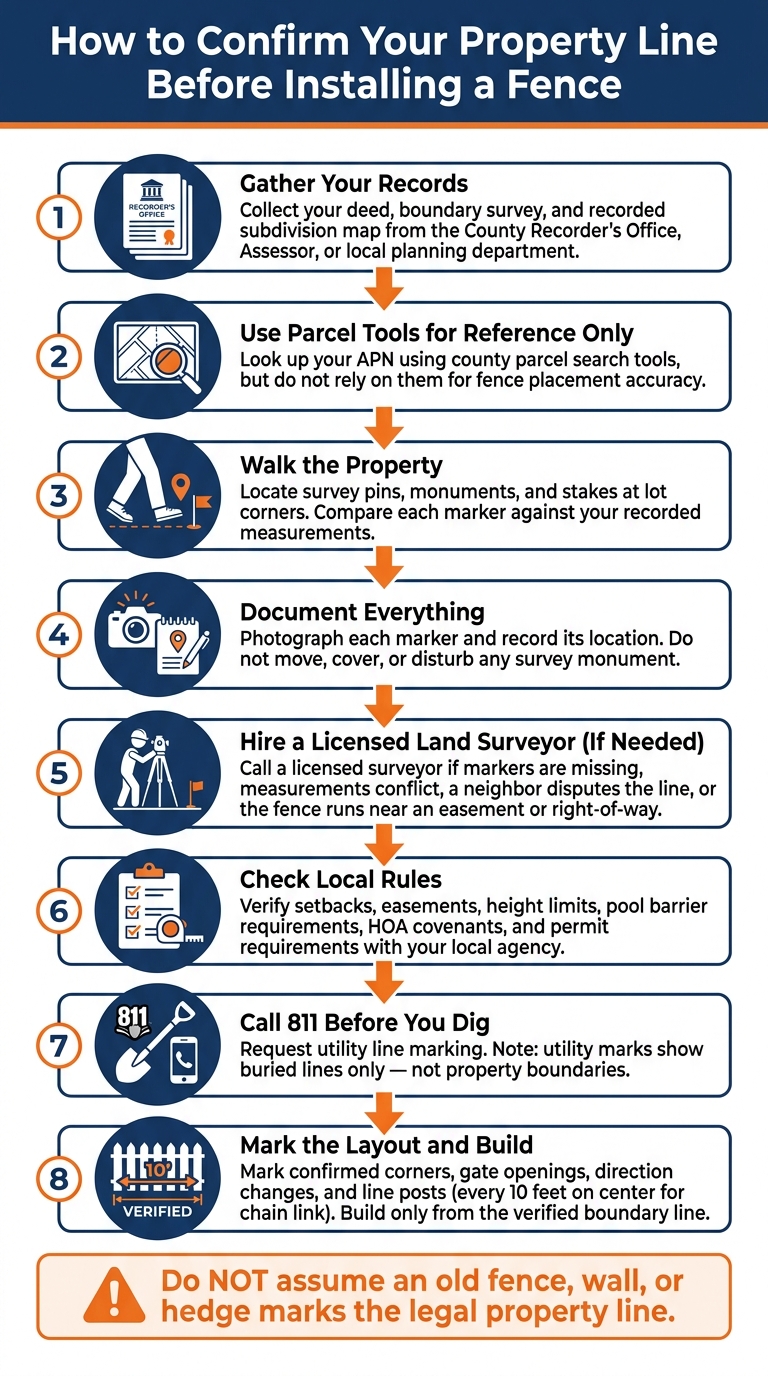
How to Confirm Your Property Line Before Installing a Fence
How to figure out if a fence is on the boundary line.
sbb-itb-0eb18cb
Gather the Records That Describe Your Lot
Pull together the papers that describe your parcel. They give you a paper trail for where the lot begins and ends, but they do not take the place of a boundary survey done by a licensed surveyor.
Start With Your Deed, Survey, and Recorded Maps
Start with your property deed. It includes the legal description of the lot, along with dimensions and bearings that define the boundary.
If you already have a survey for the property, check your files for a boundary survey or improvement survey. That document can show where the lines were physically located when the survey was prepared.
If your property sits in a recorded subdivision, get the final subdivision map too. It also helps to gather any recorded easement or right-of-way documents. Those records may show parts of the property where a fence may not be allowed.
You can usually find these records in a few places:
- Deeds and recorded maps: County Recorder's Office
- Subdivision maps: local planning or building department
- Parcel maps: County Assessor
Use County Parcel Tools for General Reference Only
County parcel search tools can help you find your APN and look at a general outline of the lot. But they are not accurate enough to place a fence line.
Once you have the records in hand, the next step is to check the property for physical markers.
Check the Site Without Assuming the Old Fence Is Correct
Walk the property and compare what you see with your records. Don’t assume anything on the ground marks the legal line. Old fences and retaining walls often sit where they were easiest to build, not where the recorded boundary sits.
Look for Pins, Monuments, and Survey Stakes
Look for survey pins, monuments, or stakes at the corners shown in your deed or survey. Then compare each marker with the recorded measurements before you treat any line as correct.
Record What You Find and Leave Markers in Place
Photograph each marker and note its location in your project records. Keep those notes with your deed and survey documents. Do not move, cover, or disturb any survey monument. If the markers don’t match your records, stop here and move to a licensed survey.
Get a Licensed Survey and Check Local Fence Rules
When to Hire a Licensed Land Surveyor
If your site walk turned up missing markers, conflicting measurements, or anything that doesn’t match your deed, it’s time to call a licensed land surveyor.
The same goes if a neighbor questions where the property line sits, or if your fence will run close to an easement or public right-of-way.
A surveyor can sort out conflicts, reset missing corners, and mark the survey-marked boundary line you should build from. That gives you a clear line to work with instead of guessing and hoping you got it right.
Once the boundary is set, check the rules that control where the fence can sit.
Check Setbacks, Easements, and Permit Requirements With the Local Agency
A confirmed line is only the starting point. Before you lock in the layout, check local setback rules, easements, height limits, and permit requirements with the local agency.
If your fence will enclose a pool, confirm the local barrier rules before you build. Pool fencing often comes with stricter standards, so it’s worth checking early.
And if your property has HOA rules, review those covenants before you finalize the layout. When the work is done, make sure any permits are properly closed out with the local agency.
Mark the Fence Layout and Prepare for Installation
Mark Corners, Gates, and the Full Fence Line
Once the boundary is confirmed, it’s time to move from paperwork to the actual layout.
Mark each confirmed corner, every gate opening, and any spot where the fence changes direction or height. These transition points often need extra bracing or larger terminal posts. For chain link, mark line posts at 10-foot intervals on center.
Call 811, Keep Your Records, and Build From the Verified Line
Call 811 before you dig. Utility markings can help you avoid underground lines, but they do not show your property boundary.
Keep your survey, permit approvals, photos, layout notes, and work order together in one file. That way, you can refer back to them during installation if anything comes up.
Conclusion: Confirm the Line First, Then Build
Confirm the line using records, site markers, and, when needed, a licensed surveyor. Check local rules, call 811, mark the layout, and build only from the verified line.
FAQs
Do I need a survey before building a fence?
Yes. A property survey helps you confirm your property lines before you install a fence. If you rely on guesswork or old markers, you could end up building on your neighbor’s land - and that can get expensive fast.
A-1 Fence & Deck Company recommends checking your boundaries first. A professional survey gives you the legal certainty you need to move ahead with confidence.
What if my neighbor disputes the property line?
Resolve the disagreement before installation begins. Check your property survey or contact a professional land surveyor for an accurate, legal boundary determination.
A direct conversation with your neighbor is often the best place to start. A-1 Fence & Deck Company recommends making sure the property lines are clearly defined and agreed upon before moving ahead.
Can I build a fence on the property line itself?
It depends on your local municipal code and any agreements with your neighbors. Before you install anything, confirm the exact property line with a professional survey.
Building right on the line may also require consent from the adjacent property owner, since the fence could be treated as a shared asset. A-1 Fence & Deck Company recommends checking with your local building department for zoning and setback rules.