
Salt air speeds up the corrosion of iron by keeping salt and moisture in constant contact with the metal, so a coastal fence rusts on a much faster schedule than the same fence built a few miles inland. The damage does not start everywhere at once. It begins at a handful of predictable spots, and homeowners who learn to watch those spots can stay ahead of it for a long time. This is a guide to what is happening, what honest maintenance looks like, and when a different material is the better answer.
Here's the short version:
- Salt holds moisture against iron, so coastal fences in Pacifica and Daly City corrode faster than inland fences in places like Redwood City.
- Rust shows up first at welds, at the base of pickets, and where posts meet their footings.
- Catching corrosion early beats waiting for a full refinish, and the dry end of fall is the window to do it.
- Powder coated aluminum gives a similar look without rust, and vinyl coated chain link covers the budget end.
- Iron is still a strong choice for plenty of Peninsula properties, especially away from the coast.
What Salt Air Actually Does to Iron
Iron corrodes when moisture and oxygen reach bare metal. On the coast, two things make that happen faster. The marine layer keeps surfaces damp for long stretches, and airborne salt settles on the fence and stays there. Salt attracts and holds moisture, so instead of drying out between fog nights, the metal stays wet longer. More hours wet means more hours of corrosion.
The finish is the defense. A powder coated finish seals the metal away from air and water. As long as that coating is intact, the fence is fine. Corrosion only begins where the coating is broken, thin, or was never fully sealed in the first place. So the real story of a coastal iron fence is not about the iron. It is about every place the coating can be compromised.
Welds
Welds are the first place to look. Joints between pickets and rails, and any spot where a section was cut, fitted, or repaired on site, can have a thinner or less uniform coating than a flat picket face. Cuts and welds made in the field during installation or a later repair may never get the same factory finish at all. Rust at a weld often looks like a small orange bloom spreading outward from the joint.
The bottom of the pickets
Look at the lower band of the fence, just above grade. Water runs down the pickets and collects there. Splashback from rain, irrigation, and wet soil throws salty water back up onto that same band. Leaves and dirt pile against the base and hold dampness. The bottom of the fence gets wet more often and dries more slowly than anything else on it, which is exactly the condition corrosion wants.
Post footings
Where a post enters concrete or soil, you get a joint between two materials that expand and move differently. Water works into that seam and sits. Damage here is the most serious kind because it attacks the structural part of the fence rather than a decorative picket, and it is often hidden until the post feels loose or the concrete shows staining.
Why Pacifica Runs on a Different Clock Than Redwood City
Two identical fences, same fabricator, same finish, can age very differently depending on where they stand. A fence facing open ocean exposure in Pacifica or on a west facing block in Daly City takes salt spray and persistent fog. A fence in a sheltered Redwood City backyard gets far less of both. This is the same reason material choice matters so much near the water, a point covered in more depth in choosing fence materials that handle Pacifica's coastal weather.
Exposure varies block by block, too. A front yard fence with nothing between it and the water will show wear before a back fence shielded by the house. Fences near a driveway that gets hosed down, or near a lawn with sprinklers, take on extra water that has nothing to do with the weather. If you already walk your property each spring, the same habits described in spring fence maintenance tips for San Mateo County homeowners apply doubly to metal near the coast.
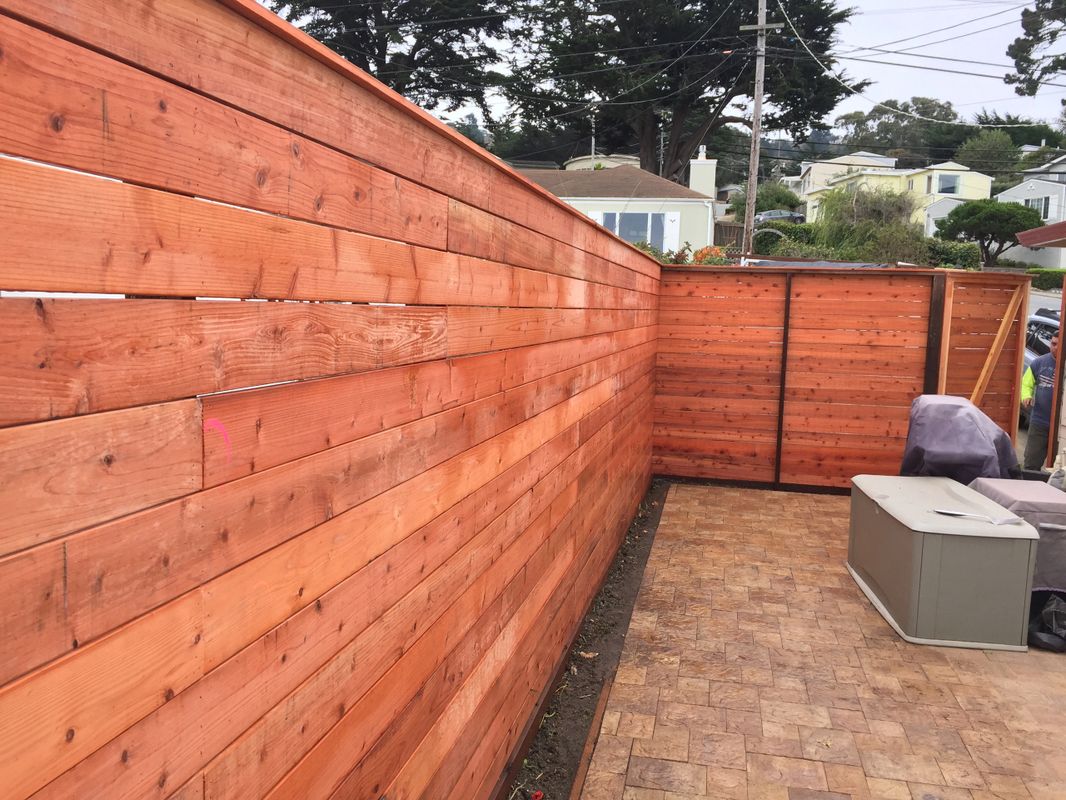
The lower portion of an iron picket where splashback and standing moisture collect.
Honest Maintenance for a Coastal Iron Fence
Nobody enjoys this work, but it is not complicated, and small efforts early save large repairs later.
Inspect at eye level and at ankle level. Most people only ever look at a fence from standing height. Crouch down and run your eye along the base of the pickets and around each post. Check every weld while you are down there.
Catch it while the spot is small. A speck of surface rust is a quick job with a wire brush and a touch up coat matched to the fence. The same spot left alone turns into a flaking patch that needs far more surface preparation before anything will stick. Brush back to sound metal, clear the dust away, then touch up.
Rinse the salt off. A plain water rinse removes accumulated salt before it can do its work. This is the single easiest thing a coastal homeowner can do, and doing it regularly through the dry season makes a real difference.
Keep sprinklers off the metal. Irrigation that sprays the fence is a repeated soaking that the weather alone would never deliver. Adjust the heads so they point away from the fence line.
Keep the base clear. Pull soil and leaf litter back from the bottom of the pickets so water can drain and air can dry the metal.
Plan touch ups for a dry fall weekend. Finishes need dry metal and dry air. Working after the rain arrives traps moisture under the new coating and undoes the effort. Late in the dry season, before the first storms, is the right window.
Comparing the Alternatives Fairly
| Iron | Powder coated aluminum | Vinyl coated chain link | |
|---|---|---|---|
| Rust in salt air | Corrodes where the finish is broken | Will never rust | Coating protects the steel core |
| Look | Traditional wrought iron elegance | Elegant iron-like appearance | Utilitarian, blends into landscape |
| Maintenance | Regular inspection, brushing, touch ups | Low | Low |
| Custom work | Custom fabricated, can match existing ironwork | Variety of styles and colors | Black, green, brown, and white coatings |
| Best fit | Inland and sheltered properties, security, pool enclosures | Coastal exposure, pools, sloped lots | Budget driven projects, pets, large runs |
Aluminum fencing is the direct substitute when rust is the deciding factor. It carries the look of wrought iron, it is lightweight yet strong, and it does not rust at all, which is why it suits the coast so well. Panels can also be racked to follow sloped terrain.
Chain link fencing with a vinyl coating is the practical answer when budget drives the decision. It is durable, low maintenance, quick to install, and the colored coatings help it disappear into landscaping.
None of this means iron is the wrong choice. Iron fencing is custom fabricated, offers superior security, and looks like nothing else. On an inland or sheltered Peninsula property, a powder coated iron fence with minimal maintenance holds its appearance for decades. For a front yard, a pool enclosure, or anywhere you want visibility with security, it is still a strong call.
Get It Looked At Before the Wet Season
A-1 Fence and Deck Inc. has been family owned since 1978, working out of South San Francisco and serving Pacifica, Daly City, San Bruno, Millbrae, and the rest of the Peninsula. We are licensed under CSLB #998389, insured and bonded, and rated 4.8 stars across 198 Google reviews. We fabricate iron to your specifications, we can match new sections to existing iron fencing or railings, and we will tell you honestly when aluminum is the smarter material for your exposure.
If your iron fence is showing rust at the welds or along the bottom of the pickets, have it looked at now, while the weather still allows repair work. Call (650) 873-7272. You can also request a free estimate.
FAQs
Does iron fencing rust?
Our iron fences are powder-coated to resist rust. With minimal maintenance, they'll maintain their appearance for decades. In coastal locations, that maintenance matters more, because salt holds moisture against any spot where the coating is broken.
Can you match existing iron work?
Yes, we can fabricate new sections to match your existing iron fencing or railings. That is useful when one section near the coast has corroded past repair while the rest of the run is still sound.
Is aluminum fencing strong enough to replace iron?
Yes. Our aluminum fencing is built with welded pickets that provide excellent security while maintaining an attractive appearance. It gives the elegant look of wrought iron without the rust concerns, which is why it fits the Bay Area coastal climate well.
When is the best time to touch up a coastal iron fence?
Pick a dry stretch in the fall, before the rains start. Finishes need dry metal and dry conditions, and working after wet weather arrives can seal moisture under the new coating.
Will vinyl fencing solve a rust problem?
Vinyl will not rust, but it is a different look entirely and does not offer the open sightlines of iron. If the goal is iron styling without corrosion, powder coated aluminum is the closer match.