
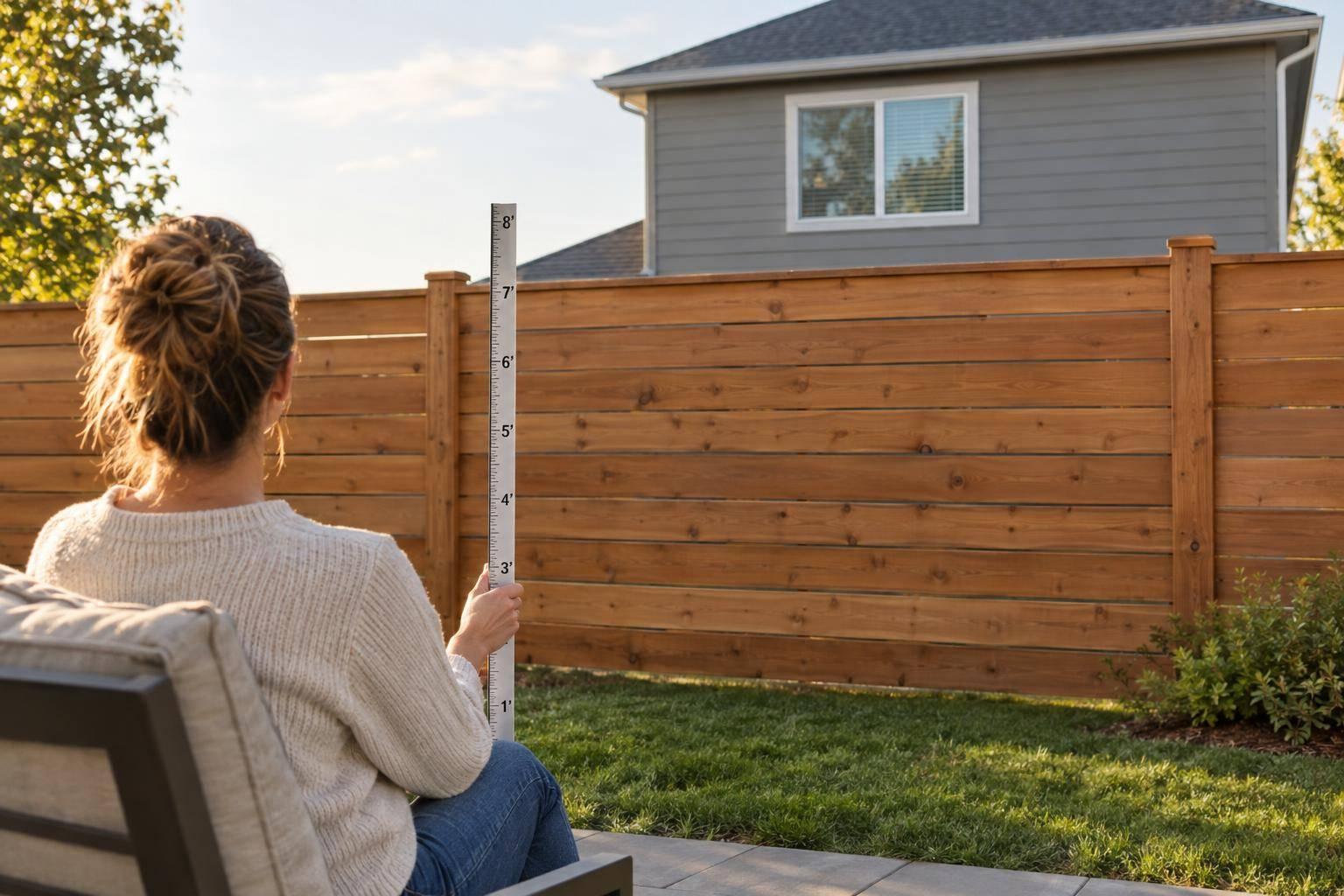
How To Choose Fence Height For Backyard Privacy
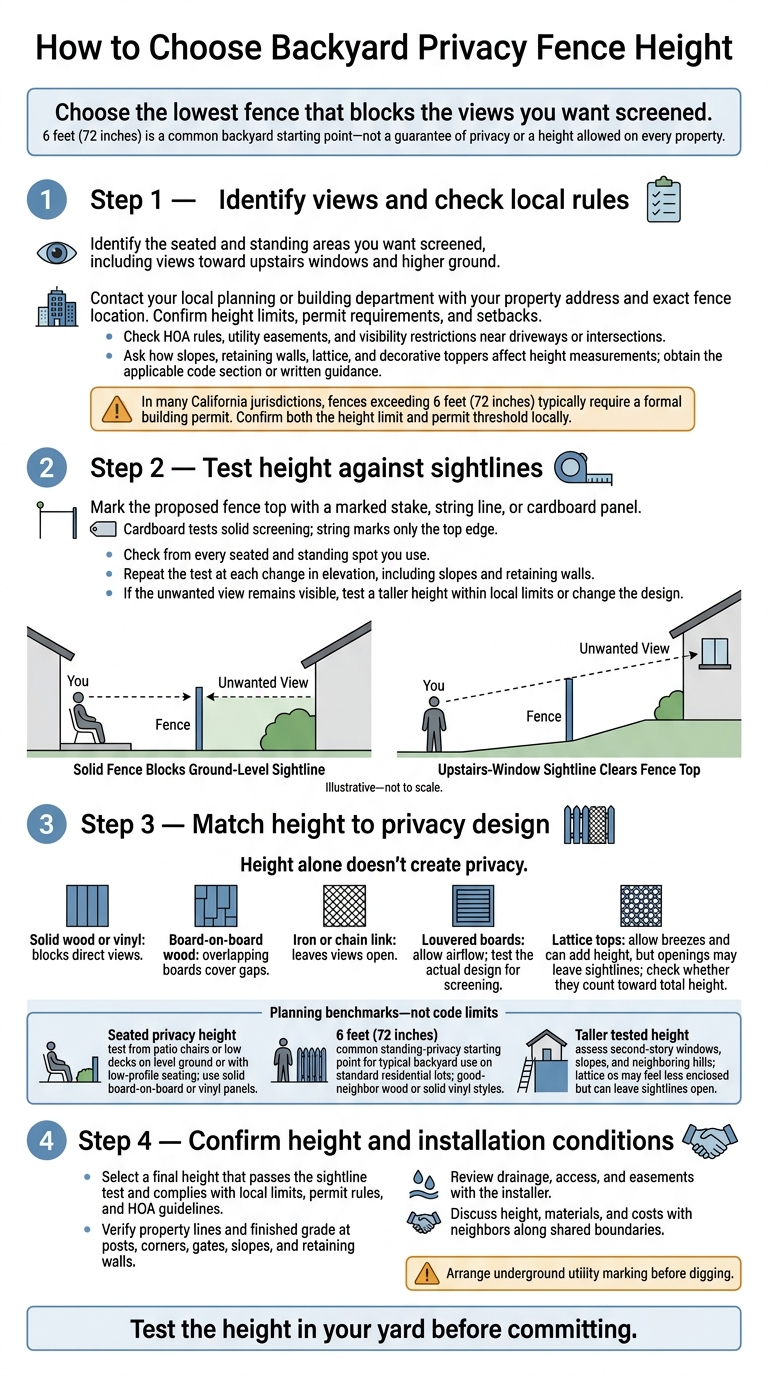
I’d start with the lowest fence that blocks the views you want screened, then check local rules before buying materials. A 6-foot (72-inch) fence is a common backyard starting point - not a guarantee of privacy or a height allowed on every property.
Here’s what I’d check:
- Sightlines: Test the proposed height from seated and standing spots, including views toward upstairs windows and higher ground.
- Local rules: Confirm height limits, permits, setbacks, HOA rules, and how slopes, retaining walls, and toppers affect measurements.
- Design: Choose solid panels or overlapping boards for direct screening. Gaps and lattice can leave views open.
- Installation: Verify property lines, drainage, access, and easements; discuss shared boundaries with neighbors and arrange utility marking before digging.
My rule: <u>test the height in your yard before committing</u>. The right choice depends on your views, your site, and your local rules.
How to Choose Backyard Privacy Fence Height
Check Local Fence Height Rules
Once you know what you need to screen, check the fence height rules for your parcel.
Contact your planning or building department before choosing a fence height. Your property tax bill or the county assessor’s website can help you identify the right jurisdiction. If your property is within South San Francisco, San Mateo, or Redwood City, contact that city’s planning or building department. For unincorporated areas, contact San Mateo County Planning and Building. In San Francisco, contact the Planning Department or Department of Building Inspection.
Confirm Height Limits, Permits, and Setbacks
Give staff your property address and the exact fence location. Ask about height limits, permit requirements, and setbacks from property lines. Also check restrictions in utility easements and near driveways or intersections, where visibility rules may limit fence height.
Ask how staff measure height on slopes or above retaining walls, and whether lattice or decorative toppers count toward the total. Get the applicable code section or written guidance before finalizing your design.
Caution: In many California jurisdictions, fences exceeding 6 feet (72 inches) typically require a formal building permit, but the rules still depend on your parcel and yard location. Confirm both the height limit and permit threshold locally.
Check HOA rules before ordering materials - they may be stricter than local code. If the fence follows a shared boundary, discuss height, materials, and costs with your neighbor before work begins.
sbb-itb-0eb18cb
Test Fence Height Against Sightlines
Once you’ve confirmed local limits, test the proposed fence height in your yard. Mark the top edge with a marked stake, string line, or cardboard panel. Cardboard lets you test solid screening; string marks only the top edge.
Check the marker from every seated and standing spot you want to screen - especially the places you actually use. If you can still see the view you want to block, try a taller fence within local limits or change the design.
This takes the guesswork out of choosing a height: you’re checking it against the views you need to block.
Check Slopes and Views From Above
Test the same height along slopes and level changes, including retaining walls. Check each change in elevation rather than relying on one height marker for the entire boundary.
Privacy at ground level doesn’t mean you’re screened from above. An upstairs window or elevated deck may overlook the fence and your seating area. From your yard, check whether those sightlines clear the proposed fence top while you sit and stand.
Match Fence Height to Material and Design
Once you know which height blocks the view, choose a material and design that provide the privacy you need.
Height alone doesn’t create privacy. The material and infill matter, too. Solid wood or vinyl blocks direct views, while iron and chain link leave views open.
With wood, board-on-board construction overlaps boards to cover gaps. Louvered boards allow airflow, and a lattice top lets breezes through.
Lattice can also add height without making the fence feel like a fully solid wall. Before adding it, check whether it counts toward the total fence height.
Review Height Options by Privacy Goal
Use these options to match your privacy goal to a fence height. These are planning benchmarks, not code limits.
| Height | Privacy objective | Viewpoint | Site conditions | Design considerations |
|---|---|---|---|---|
| Seated privacy height | Seated privacy | From patio chairs or low decks | Level ground or low-profile seating | Use solid board-on-board or vinyl panels to block direct sightlines. |
| 6 feet (72 inches) | Standing privacy | Typical backyard use | Standard residential lots | Common for good-neighbor wood or solid vinyl styles. |
| Taller tested height | Elevated views | From second-story windows or sloped terrain | Slopes or neighboring hills | Lattice or louvered tops can add height with a less enclosed feel, but openings may leave sightlines. |
Before ordering, confirm the exact height on your site using your chosen material and layout.
Confirm Your Final Fence Height
After your sightline test, settle on a final height that blocks the views you identified and meets local height limits, permit rules, and HOA guidelines. Check that it also fits your site conditions.
Recheck Measurements and Installation Conditions
Before finalizing measurements, verify property lines and finished grade at posts, corners, gates, slopes, and retaining walls. Ask the city how it measures fence height where the grade changes or retaining walls are present.
Review drainage, access, easements, and plans for shared property lines with your installer. Arrange underground utility marking before digging, and notify neighbors early if the fence will sit on a shared boundary.
FAQs
How can I get privacy if fence height limits are too low?
If local rules limit your fence height, choose a style that blocks sightlines without exceeding the limit. Board-on-board fencing overlaps boards to eliminate gaps. Louvered fences use slanted boards to block views while letting air flow through.
Adding lattice can offer extra screening and a finished look. Just make sure it also meets local requirements.
Can different parts of my fence have different heights?
Yes, different sections of your fence can have different heights, as long as you keep the fencing style, layout, and materials consistent. A-1 Fence & Deck Company can help you choose a style and arrangement that gives you the privacy you want while keeping a consistent look across sections.
How can I balance backyard privacy with airflow?
A louvered fence uses slanted boards to provide privacy while letting air pass through the gaps. A board-on-board fence with diagonal or horizontal-and-vertical lattice gives your yard a finished look and lets breezes through to keep you comfortable in warm weather.
A-1 Fence & Deck Company can help you choose a design that fits your backyard’s needs.