
If you own property in South San Francisco, fence work is often about three things: privacy, security, and making hard-to-use space work better. I see that clearly here: homes often need side or rear fences up to 6 feet, front setback fences are often capped at 4 feet, and some commercial fences can go to 8 feet or 10 feet on retaining walls with approval.
Here’s the short version:
- Homes often need fences, gates, and retaining walls for privacy, safer yards, and flatter usable space
- Businesses often need enclosures and gates for site security and traffic control
- Local rules matter because fence height, chain-link use, screening, and setback limits can change what you can build
- Permits can take up to 4 weeks, so local job knowledge can help avoid delays
- Material choice matters in Bay Area weather, especially for wood, vinyl, and coated or galvanized metal
What stands out to me is simple: this isn’t just about putting up a fence. It’s about solving day-to-day property problems in a city with hills, tight lots, and code limits. That is the thread running through the whole piece.
A few facts help sum it up fast:
| Topic | Key point |
|---|---|
| Residential fence height | Up to 6 feet on interior side and rear lines |
| Front/street-facing opaque fences | Limited to 4 feet in required setbacks |
| Fence on retaining wall | Up to 8 feet in some residential cases with approval |
| Commercial fence height | Up to 8 feet, or 10 feet on retaining walls with approval |
| Permit timing | Often up to 4 weeks |
My takeaway: local fence and wall work supports South San Francisco in a direct way. It helps people use their yards, protect property, control access, and deal with slope and space limits without running into avoidable code issues.
A-1 Fence Company's roots in South San Francisco
A-1 Fence Company has been a family-owned business in South San Francisco since 1978. That long local track record matters. It helps on projects shaped by city standards, steep lots, and permit rules. And in South San Francisco, those details can change the whole job.
South San Francisco's updated Lot and Development Standards, adopted August 12, 2026, set rules for fences, walls, and accessory structures. Much of the city also sits within SFO's Airport Influence Area and must follow the Comprehensive Airport Land Use Compatibility Plan.
Services that support local properties
A-1 installs residential and commercial fencing in wood, iron, chain link, vinyl, and aluminum. The company also builds gates, decks, arbors, retaining walls, and security cages.
City rules can shape what works and what doesn't. In South San Francisco, opaque fences in required front and street-facing side setbacks are limited to 4 feet, and chain-link fencing is restricted in residential districts. A-1's local background helps clients choose materials and layouts that fit those rules. You can see that most clearly in residential projects.
Case study 1: Residential projects that improve safety, privacy, and yard use
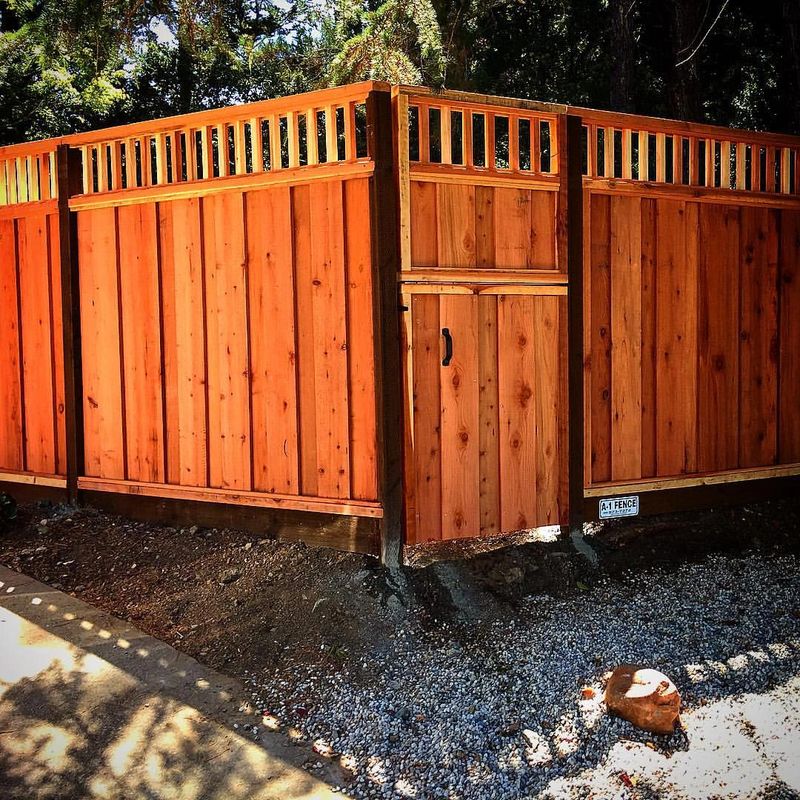
South San Francisco homes often sit on compact lots, and sloped ground is part of the deal. That combo tends to create the same three goals again and again: more privacy, safer enclosure, and yard space you can actually use.
Local rules shape how that gets done. In South San Francisco, opaque fences are limited to 4 feet in front and street-facing side setbacks. Interior side and rear fences can go up to 6 feet.
Fence materials for Bay Area homes
The material you pick changes more than the look of the fence. It affects how much privacy you get, how much work it takes to maintain, and how well it holds up over time.
Wood is a common pick for rear and side property lines because it gives strong privacy. The tradeoff is upkeep. It usually needs regular staining or sealing to stay in good shape. Vinyl gives that same closed-off feel with much less maintenance, which makes it a solid fit for busy households. Wrought iron is often a better match for front yards because it keeps visibility open, which matters where sightlines must stay clear. Concrete block is more limited. In South San Francisco, it works only when finished with stucco and a decorative cap.
| Material | Privacy Level | Security | Maintenance | Typical Use in South San Francisco |
|---|---|---|---|---|
| Wood | High (opaque) | Moderate | High (staining/sealing) | Rear and side privacy fences |
| Vinyl | High (opaque) | Moderate | Low | Low-maintenance option for dense neighborhoods |
| Wrought Iron | Low (transparent) | High | Moderate | Front yards, gates, decorative perimeter |
| Concrete Block | High | High | Low | City-approved only when finished with stucco and decorative cap |
Retaining walls, gates, and custom layouts for difficult lots
Sloped lots can make a fence project more complicated fast. If the ground drops off, you can end up with awkward gaps under the fence or yard areas that feel chopped up and hard to use. That’s where retaining walls come in. They help create level space and can support fence placement where grade changes would otherwise cause problems.
In South San Francisco, the Chief Planner may approve fence heights up to 8 feet when a fence sits on top of a retaining wall in a residential district. On a lot with a sharp elevation change, that can make a big difference.
Gates also matter more than people think. They keep driveways and service paths open without interrupting the fence line. And on narrow lots, a custom layout is often the only way to make the project fit both the property and the setback rules. A fence that looks simple on paper can get tricky once measurements, slope, and access all come into play.
That same attention to code shows up in commercial work too, where access and security needs depend heavily on the site.
Case study 2: Commercial and multi-property work that supports daily operations
Residential jobs usually center on privacy and how people use a yard. Commercial sites are different. Here, the main goals are security and smooth traffic flow.
In South San Francisco, commercial properties need fences and gates that support access control, site security, and day-to-day movement around the property.
In industrial and business technology districts, fences can reach 8 feet, or 10 feet on retaining walls with approval, but intersections and driveways still need clear sightlines. And there’s another rule that matters on commercial lots: chain-link fencing used for perimeter lines must be screened from public view, including from streets, highways, and commuter rail lines.
Security cages, chain link enclosures, and controlled access
These jobs usually fall into three main setups:
- Security cages to protect equipment, storage zones, or access points inside a larger site
- Chain-link enclosures to mark perimeters and enclose outdoor storage areas
- Sliding or leaf gates to manage vehicle flow, with pedestrian gates that separate foot traffic from cars and trucks on shared lots
Even though the use case is different, commercial and residential work still rely on the same basics: local code knowledge and careful site layout. Hot-dip galvanizing and powder coating help metal stand up to Bay Area weather and cut maintenance needs.
When the layout is done well, the site stays secure without slowing down access for staff, tenants, or visitors.
Conclusion: How local project work strengthens the South San Francisco community
Taken together, these residential and commercial projects show how local fence work supports day-to-day life in South San Francisco. Every South San Francisco project A-1 Fence Company completes can make a property work better by adding privacy, safety, and easier access.
There’s also the curb appeal side of it. These projects line up with South San Francisco’s preference for orderly, attractive properties.
Family-owned since 1978, A-1 Fence Company brings local experience with terrain, permits, and Bay Area property needs. That carries extra weight on jobs that call for retaining walls to stabilize soil and create level, usable space on South San Francisco’s hilly lots.
Key takeaways for homeowners, property managers, and business owners
Local experience helps with permits, which can take up to four weeks. When a contractor already knows the process, it’s often easier to keep the project on track.
Match the project to the property. On the residential side, fence projects often deal with privacy, slopes, and making yards easier to use. On commercial sites, the focus is often perimeter security, access control, and secure enclosures that support daily operations.
Quality materials last longer and need less maintenance. The right materials, paired with solid craftsmanship, help protect the value of the investment.
For South San Francisco property owners, the right fence project does more than fix a local issue. It also makes the property stronger and more useful every day.
FAQs
Do I need a permit for my fence project?
In South San Francisco, permit rules depend on what you're building and where the work happens. Local building codes and zoning rules set limits on fence height and the materials you can use.
Bigger jobs, and any work that touches public property, often need permits. That includes things like excavation in streets or sidewalks. In those cases, permits usually come from the Department of Public Works or the Building Department.
The safest move is simple: check with local officials or ask a licensed contractor to confirm what applies to your property.
What fence material works best in South San Francisco?
In South San Francisco, the best fence material is one that lasts and follows local code. A-1 Fence & Deck Company helps you pick high-quality materials that suit the local climate and meet city rules.
For homes, local code does set a few clear limits. Residential properties can't use barbed or razor wire. Chain-link fencing is restricted. And if you use concrete block, it must be finished with stucco and topped with a decorative cap.
Can I build a taller fence on a retaining wall?
Yes. In South San Francisco, you can build a taller fence on a retaining wall, but you need approval from the Chief Planner.
The Chief Planner can allow fence heights up to 8 feet in residential districts and 10 feet in non-residential districts. Local building codes and permit rules still apply, so it’s smart to talk with a professional before you move ahead.